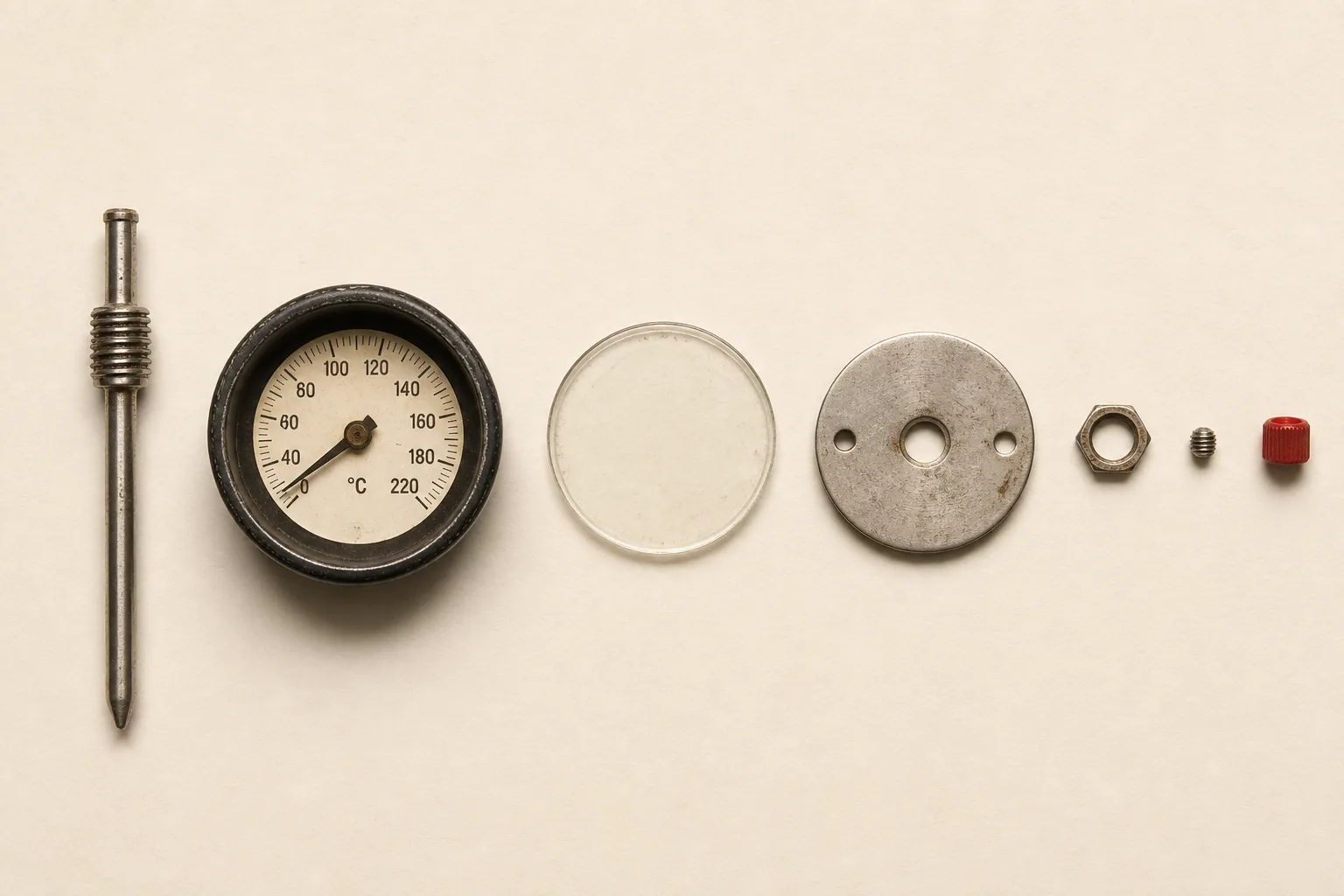
ATTENTION, PEOPLE WHO THINK THE TWO-HOUR RULE RESETS WHEN YOU LOOK AWAY!
PEOPLE WHO CALL A RECIPE “FLEXIBLE” AFTER REPLACING HALF ITS CHEMISTRY! PEOPLE WHO HAVE PUT A WARM STOCKPOT IN THE FRIDGE AND WHISPERED, “THE COLD WILL SORT IT OUT”!
Are you tired of not wondering whether the soup has spent enough time on the counter to develop a small but ambitious future?
Have you looked at a recipe, changed the acid, the starch, the heat and the storage plan, then called the result “basically the same thing” because both versions contain a bowl?
Then congratulations.
You qualify for the Five Number One Rules of Cooking Without Rolling the Dice — five controls for the points where a meal stops being a recipe and starts being a chain of consequences.
“Wait,” you’re yelling at the cutting board, “they can’t all be Number One!”
That’s exactly what Big Numbering wants, while it sells “taste as you go” as a substitute for measuring, controlling heat, understanding an ingredient, cooling food, and checking the one step that actually mattered.
Cooking failures are specialists.
A flawless 3:1 vinaigrette can’t rescue food that sat too long in the danger zone.
A thermometer can’t make baking soda behave like baking powder once the acid is gone.
A perfect substitute can’t recover a quantity nobody measured.
And a checked box can’t compensate for a step that never happened.
Five different jobs. Ratios govern proportion. Heat governs texture and sometimes safety. Ingredient function governs whether the intended chemistry happens at all. Cooling governs what grows afterwards. Verification governs whether the critical transition actually occurred or was merely fondly remembered.
So here they are.
Five rules.
Five Number Ones.
No substitutions. No vibes-based refrigeration. No entering “it smelled fine” into evidence.
RULE #1: MEASURE THE RATIO BEFORE YOU IMPROVISE
Introducing CUP-O-MATIC: THE CONFIDENCE LADLE™, the revolutionary measuring system that holds exactly “about this much” right up until the sauce asks for evidence.
A ratio isn’t a suggestion that happens to contain a colon. It’s the relationship the recipe was built to preserve.
Find the base unit. Multiply from it. Do not rebuild the whole thing by eye.
Vinaigrette makes the arithmetic refreshingly rude to intuition. Three tablespoons oil to one of vinegar is 3:1. For eight people, multiply both sides — 1½ cups oil, ½ cup vinegar.
The ratio doesn’t move. A bigger batch might need a more vigorous shake. It does not grant you a new relationship between oil and vinegar.
Baker’s percentage gives the same discipline a clipboard. A lean dough at 100% flour, 60% water, 2% salt, 1% yeast, built on 500 g of flour, means 300 g water, 10 g salt, 5 g yeast. Move to 1,000 g of flour and everything doubles.
Everything is defined against flour weight — not against a fixed batch, and not against each other. That’s why the formula travels, and why nobody has to perform cup arithmetic while flour climbs into their hairline.
Now the trap, and it’s a good one.
Don’t confuse the ratio inside a component with the ratio that governs the finished dish.
A roux is equal parts fat and flour by weight. That internal 1:1 tells you nothing about how much roux belongs in a given quantity of liquid — sauce body depends on the separate starch-to-liquid ratio. And if a white roux is cooked to a dark roux, it carries roughly a quarter of the thickening power by weight.
So the fat and flour can be impeccably equal while the sauce remains an eloquent soup.
Taste adjustment comes after the load-bearing ratio is set. Acid, salt, herbs and sweetness can make a formula taste more like the meal you had in mind. They cannot repair a structure whose measured base has drifted.
Measure the relationship first. Improvise around it second.
Cooking by feel is a real skill. Pretending the formula has no feel is a different skill, usually called explaining dinner.
RULE #1: CONTROL HEAT FOR THE OUTCOME YOU WANT
BEHOLD HEAT-O-SCOPE 7000™, the countertop oracle that reveals one shocking truth: “hot” is not a temperature, a duration, or an outcome.
Heat changes food. Heat also changes the risk carried by food. Keep those two jobs separate, or one success will happily impersonate the other.
Cornstarch gelatinises and thickens once heated past roughly 203°F, and gives you a translucent result. Flour thickens lower and gives you an opaque one, because flour brings protein and other starches along for the ride.
Your recipe may want thickness. Or translucency. Or both. “It gets thick eventually” is not the same outcome in a different hat.
Food safety splits the same way, and this is where people get caught.
Salmonella and Campylobacter are largely handled by cooking temperature — 165°F for poultry, 145°F with rest for whole cuts. Straightforward. Thermometer solves it.
Clostridium perfringens does not play that game. Large batches of stews, gravies and roasts get cooked perfectly, then cooled too slowly. The pathogen is entirely unmoved by the fact that you had a glorious thermometer moment two hours earlier.
That distinction has real scale behind it. The CDC estimates roughly 48 million foodborne illnesses, 128,000 hospitalisations and 3,000 deaths in the United States annually. The WHO estimates about 600 million illnesses and 420,000 deaths globally each year, with children under five accounting for roughly 30% of those deaths.
None of that turns dinner into a courtroom drama. It does establish that heat and handling aren’t decorative culinary preferences. They’re controls, and they have different jobs.
Heat is not a mood. It is a tool whose outcome has to be named.
The pan can’t read the recipe’s intentions. It can only receive energy, with enormous sincerity.
RULE #1: MATCH A SUBSTITUTE BY FUNCTION
And now, from the makers of “THESE TWO THINGS ARE BOTH WHITE POWDER,” comes PANTRY-SWAP EXTREME™ — the product line where flavour resemblance applies for a job in chemistry.
Every substitution starts with one question: what work was the original ingredient doing?
Acid. Leavening. Gelatinisation behaviour. Fat content. Flavour. Those are separate jobs, and the substitute has to match the one the formula actually assigned.
Baking soda and baking powder make the point with unnecessary clarity. Soda needs an acid present to react and release carbon dioxide. Powder is soda pre-mixed with its own acid and a moisture-blocking desiccant, so it can leaven a formula containing no acid at all.
Swapping one for the other isn’t a taste decision. It’s an acid-accounting decision, and the formula will audit you.
Take a batter with a cup of flour, an egg, and a cup of buttermilk. It needs only about half a teaspoon of baking powder, because the buttermilk’s acid is already reacting with roughly a quarter-teaspoon of soda and doing much of the work.
Remove the buttermilk and the soda has lost its partner. Add powder and the formula now carries its own acid. The details changed because the mechanism changed.
The homemade buttermilk substitute shows the same rule from the other side. A tablespoon of vinegar or lemon juice per cup of milk, rested about ten minutes until visibly curdled, recreates the acidic environment. It supports the reaction with baking soda and the tenderising effect on gluten.
What it does not recreate is buttermilk’s fermented flavour or full viscosity.
Which makes it an excellent functional substitute when you need acid — and a poor one when what you actually wanted was tang.
Starches divide the same way. Cornstarch gives a translucent gel. Flour changes both appearance and mouthfeel. Arrowroot substitutes for cornstarch roughly one-for-one because it shares the translucent behaviour. A pie filling can thicken beautifully with flour and still fail the brief, because it now looks and feels like a different pie.
Substitute the job, not the ingredient’s biography.
The pantry is full of look-alikes. The recipe is full of employment contracts.
RULE #1: COOL AND STORE ON A CLOCK
NOW AVAILABLE: COUNTER-TIME ETERNITY™ — the magical kitchen clock whose two hours renew every time food changes rooms, containers, or social settings.
It does not exist.
The two-hour danger-zone limit is cumulative. Food between 40°F and 140°F carries a running total that nothing resets.
Thirty minutes cooling on the counter.
Twenty minutes travelling to the potluck.
An hour on the buffet table.
That’s an hour fifty. Same as if it had sat in one place the entire time, because it did — the food never knew it changed rooms.
Looking away does not open a new tab in the bacteria browser.
The middle of the zone matters most: growth is fastest roughly between 70°F and 117°F. Which is why a deep stockpot isn’t merely a large shallow container with more personality. Depth governs cooling speed. The same soup divided into shallow pans crosses the fast-growth range far quicker than a full pot left to negotiate its own exit.
Refrigeration and freezing then do genuinely different work. Refrigeration slows bacterial growth without stopping it. Freezing at 0°F or below arrests it almost completely, which is why properly frozen food is described as safe more or less indefinitely.
Quality runs on a completely separate clock. Texture, flavour and ice-crystal damage keep degrading the whole time. “Safe indefinitely” doesn’t mean “unchanged indefinitely,” which is why the freezer is not a time machine with a door seal.
And storage isn’t a retroactive substitute for cooking. Listeria monocytogenes grows from ordinary refrigerator temperature all the way up to body temperature, and it’s associated with ready-to-eat foods that get no further cooking — deli meats, soft cheeses, prepared salads, unpasteurised dairy. Cooking and pasteurisation kill it, but contamination can occur after those steps, during slicing or packaging.
At which point storage time and temperature are the only control you have left.
The clock runs across the whole journey, not just the part that feels like waiting.
Cold is useful. It is not an alibi.
RULE #1: VERIFY THE CRITICAL STEP BEFORE SERVICE
INTRODUCING I’M-SURE-I-DID-IT™ — the memory-powered kitchen management system with no record, no pause point, and the unmistakable aroma of a missing lid.
A useful kitchen checklist isn’t an autobiography of every competent action you performed. It’s short, tied to a recurring failure, and run at the moment an omission would matter.
Two sequences, and the choice between them is the whole technique.
Read-do: read the item, do it, read the next. The list drives the work and remembers where you stopped when somebody walked in.
Do-confirm: work from memory and experience, then stop and confirm the critical items. Faster — and it catches an omission only after the fact.
Match the mode to how practised the work is and how expensive a mid-course correction would be.
Cooling, storage and reheat are ideal do-confirm candidates, precisely because they’re the transitions a cook is most likely to assume happened.
Cooling begun?
Shallow containers where they were needed?
In the fridge inside the cumulative window?
Reheat done before service?
Every one of those has a visible answer. None of them asks you to report feeling generally responsible.
And don’t mistake a completed box for a completed action. In one study of 212 procedures, reported checklist completion averaged 95.5% while independently observed completion averaged 46.8%.
Nobody needs a camera crew behind the spice rack. But that gap is a general human talent, not a medical one: documentation and behaviour are two different measurements, and only one of them feeds anybody.
A checklist does not replace the step. It makes the missing step harder to mistake for memory.
If the only proof is “probably,” the kitchen has started selling imagination by the serving.
BUT WAIT, THERE’S MORE!
“What about soup?”
Same rules. Measure the base, name the heat outcome, cool it shallow, and count every minute it spent in the zone.
“What about baking?”
Same rules. Baker’s percentage makes the base visible. Acid and leavening have to match. Cornstarch, flour and arrowroot don’t get interchangeable badges.
“What about leftovers carried to somebody else’s house?”
Same rules. Counter time, car time and buffet time all belong to one clock. Changing location changes nothing but the scenery.
“What about a magnificent family recipe that has always been made by feel?”
Same rules. Taste and experience genuinely guide adjustment. They don’t make food storage, ingredient function, or an unmeasured critical transition disappear.
The details change.
The architecture doesn’t.
THE FIVE, WITHOUT THE GARNISH
Measure the ratio before improvising. Scale from a base unit, and keep component ratios separate from the ones governing the finished dish.
Control heat for the outcome you want. Name whether it’s changing texture, hitting a cooking target, or moving food through a cooling process.
Match a substitute by function — the acid, the leavening, the starch behaviour, the fat — not by which jar it resembles.
Cool and store on a cumulative clock, and use shallow containers when a batch is large.
Verify the critical step before service. A checked box is not the action.
DO THIS TONIGHT, BEFORE THE POTLUCK BECOMES A TIMELINE
Pick one ratio-driven recipe. The vinaigrette, or a baker’s-percentage dough.
Write the base unit. Then calculate the batch, rather than enlarging it by vibes.
If you’re planning a substitution, name the function being replaced out loud: acid, leavening, gelatinisation, fat, or flavour. If nothing in the cupboard does that job, change the plan — don’t ask optimism to rise.
Then open the fridge and the freezer, and separate two questions you’ve probably been answering as one: is this safe, and is this still good? Those have different answers and different clocks.
Before the next large hot batch, set out the shallow containers before you start cooking. Afterwards is when nobody does it.
Run the time as one continuous exposure — counter to car to table.
Finally, write a four-line do-confirm where food actually gets packed or served. Cooling begun. Shallow containers used. Storage inside the window. Reheat completed.
Stop at each one. Answer with something you can see.
For the low, low price of measuring before guessing and checking before serving, the complete Five Number One system is yours.
No subscription. No chef’s coat. No tiny ramekin of unearned confidence.
And if you act now, the kitchen receives the one device every recipe has quietly been asking for:
a sequence that survives being busy.
Operators are no longer standing by.
The operator is whoever is feeding people.